
Every above-joist drainage system lives or dies on one component nobody sees once the deck is built: the seal between the boards. It has no cap, no coating, and no second chance. It sits outdoors, compressed, in full sun, for the life of the deck. Get the material wrong and the whole waterproofing promise fails quietly, one degraded seal at a time. That is the entire reason Dexerdry is built from automotive-grade TPE instead of a generic rubber or foam gasket, and why AmeriDex reinforces that material even further for a job that is harder than anything a car door ever asks of it.
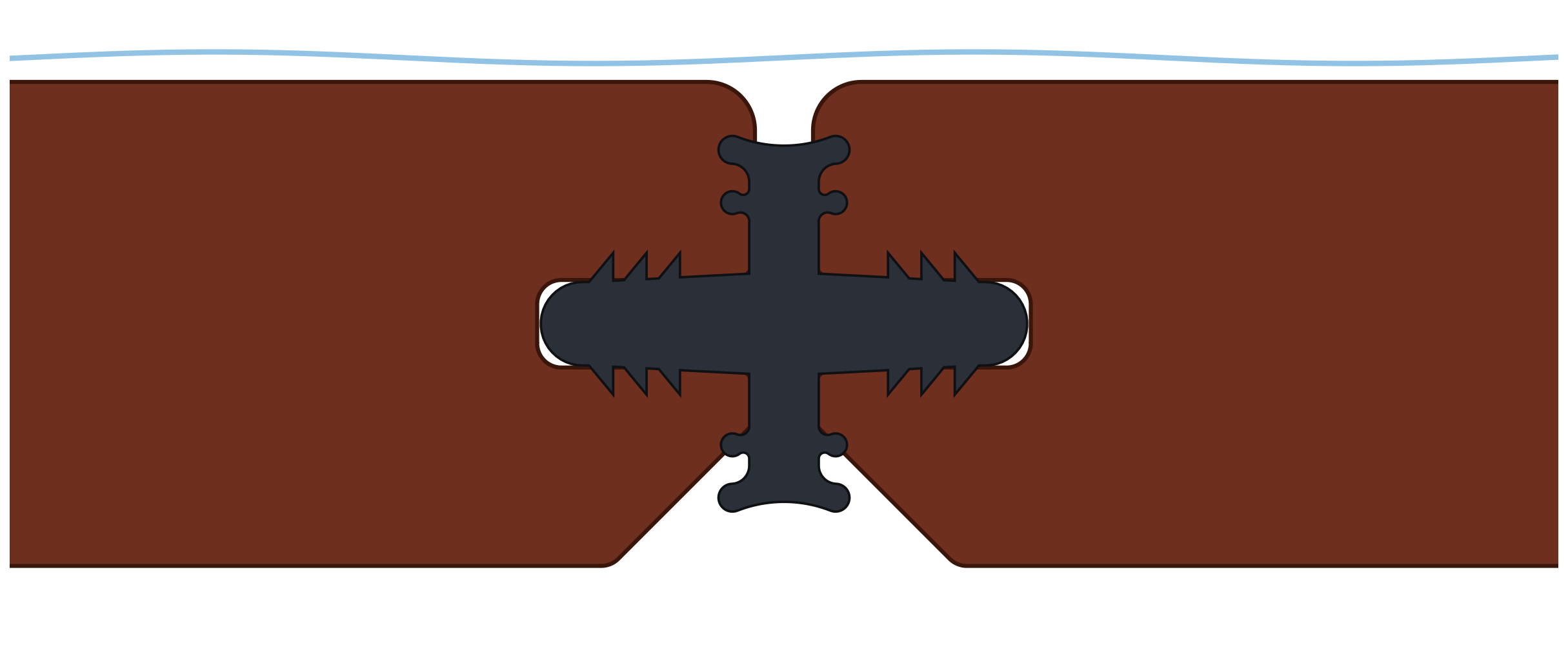
What TPE actually is, and why the automotive world settled on it
A thermoplastic elastomer is a two-phase material: rigid plastic segments hold its shape, soft rubber-like segments give it flex and rebound, and the two are engineered together in one polymer rather than blended after the fact. That combination is why the automotive industry moved its door seals, window seals, and body gaskets to TPE over plain rubber. A car seal has to compress every time a door closes, hold a tight line against wind and water at highway speed, and do it in a sun-baked parking lot for a decade without cracking, hardening, or going flat.
- Compression set resistance. A seal that stays compressed too long can forget its original shape, a failure called compression set. TPE is specifically formulated to keep rebounding to full thickness, cycle after cycle, which is exactly the load a deck seal carries between board and board for the life of the structure.
- UV and ozone resistance. Sunlight and ambient ozone are what age standard rubber, turning it brittle and cracked. Automotive-grade TPE is compounded to resist both, since a parked car spends real time outdoors with no cover.
- A wide working temperature range. The same seal has to stay flexible on a frozen morning and stable on a hot afternoon without softening, a range automotive TPE grades are built and tested against.
A deck asks more of a seal than a car ever does
Automotive TPE is engineered for years of outdoor exposure, but a parked car still gets a garage, a carport, or at minimum a wash now and then. A deck seal gets none of that. Once it is built into the Dryspace System, it is outdoors permanently, under continuous UV load, with no covered exposure and no realistic path to inspect or replace it without pulling boards. That gap between what automotive TPE is designed for and what a deck genuinely demands is exactly where Dexerdry adds its own reinforcement on top of the base material.
Dexerdry uses two durometer grades of TPE working together rather than one generic profile doing both jobs. The softer grade forms the sealing lip, the part that has to compress against every board and close the gap without gapping or wrinkling. The firmer grade forms the structural core that holds the seal geometry and anchors it in place under the fastening pattern. On top of both, AmeriDex compounds in additional UV and ozone resistant protection beyond a standard automotive specification, since the exposure a deck seal faces, permanent, uncovered, and unmaintained, is a harder environment than what automotive TPE was originally engineered against.
Side by side, where the material choice actually shows up
| Property | Standard rubber (EPDM/neoprene) | Foam gasket tape | Automotive-grade TPE (Dexerdry) |
|---|---|---|---|
| Compression set over years | Gradually loses rebound and flattens | Compresses permanently, fastest to fail | Engineered to keep rebounding to shape |
| UV and ozone exposure | Hardens and cracks over time in full sun | Degrades quickly, not built for exposure | Compounded for continuous outdoor UV load |
| Manufacturing process | Vulcanized, cannot be remelted or reworked | Adhesive backed, simple but low durability | Thermoplastic processed for consistent, repeatable profiles |
| Typical use case | Automotive and architectural seals | Temporary or low-load sealing | Automotive door, window, and body seals |
| Dexerdry reinforcement | Not applicable | Not applicable | Dual durometer design plus added UV/ozone compounding beyond standard automotive spec |
Foam gasket tape and standard rubber were never engineered for a permanent, structural, uncovered outdoor seal. Automotive-grade TPE was built for the closest real-world equivalent, and Dexerdry takes that starting point further for a job with no garage and no replacement cycle.
The bottom line
A dry-space system is only as good as the seal holding it together, and that seal gets one shot to be right, since nobody is climbing under the deck to check on it in year twelve. Automotive-grade TPE was engineered for exactly this kind of quiet, high-stakes, long-term compression job, which is why it replaced rubber in the vehicles people trust every day. Dexerdry starts from that same proven material class, builds in a dual durometer design most seals never bother with, and reinforces it further with additional outdoor weathering protection for an exposure harsher than any car ever sees. That is the seal underneath every AmeriDex Dryspace deck.
If you are planning a new deck, request free samples to see the Dexerdry seal in your hands, and start a free quote to size the system for your project.